Collaborative AI Agents

Enable Intelligent Collaboration in enterprise processes through Collaborative AI Agents working together to control complicated processes,
make joint decisions, and implement business processes. We use intelligent collaboration to automate processes effectively.

Collaborative AI Agents That Collaborate for More Impact

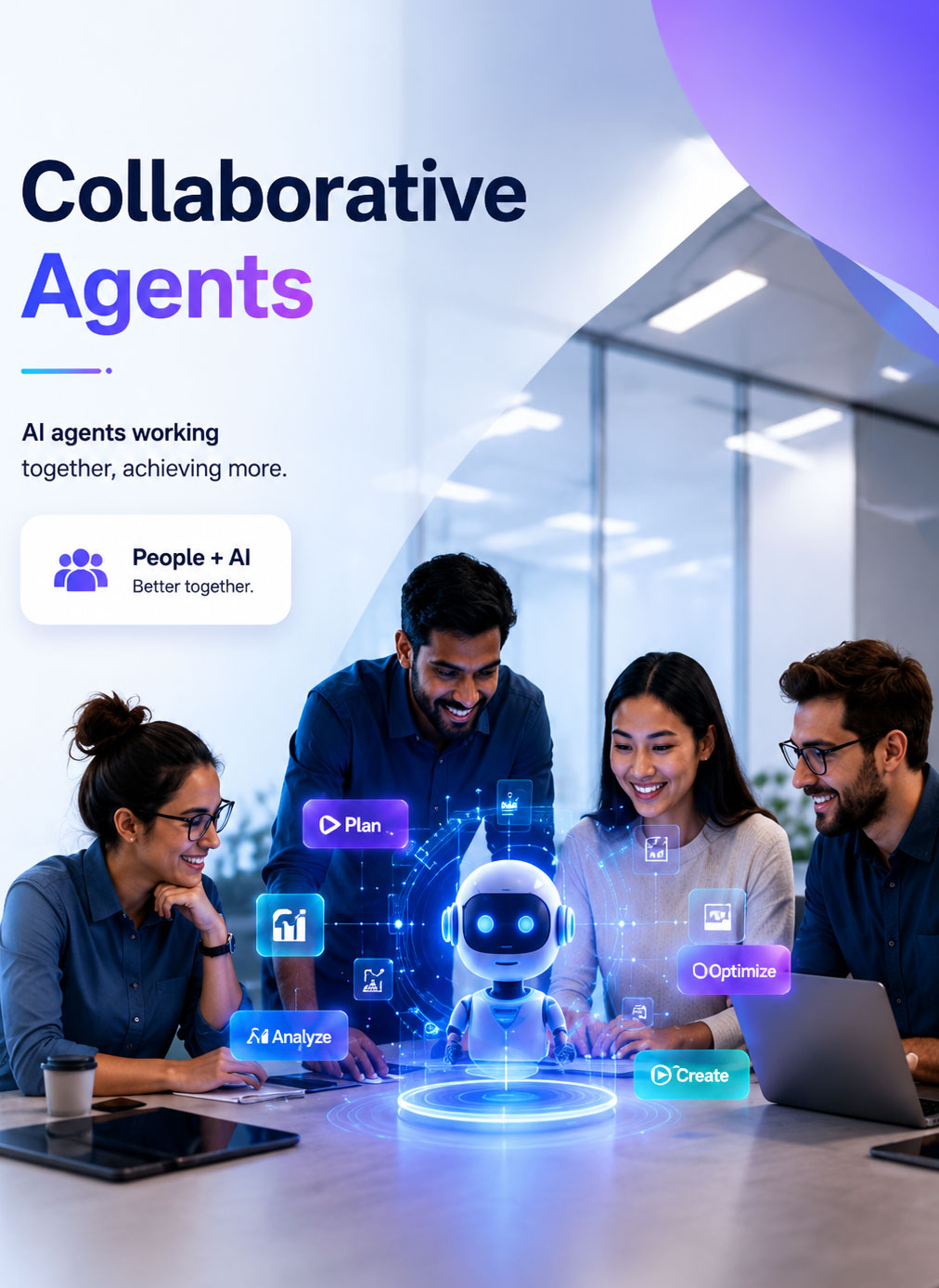
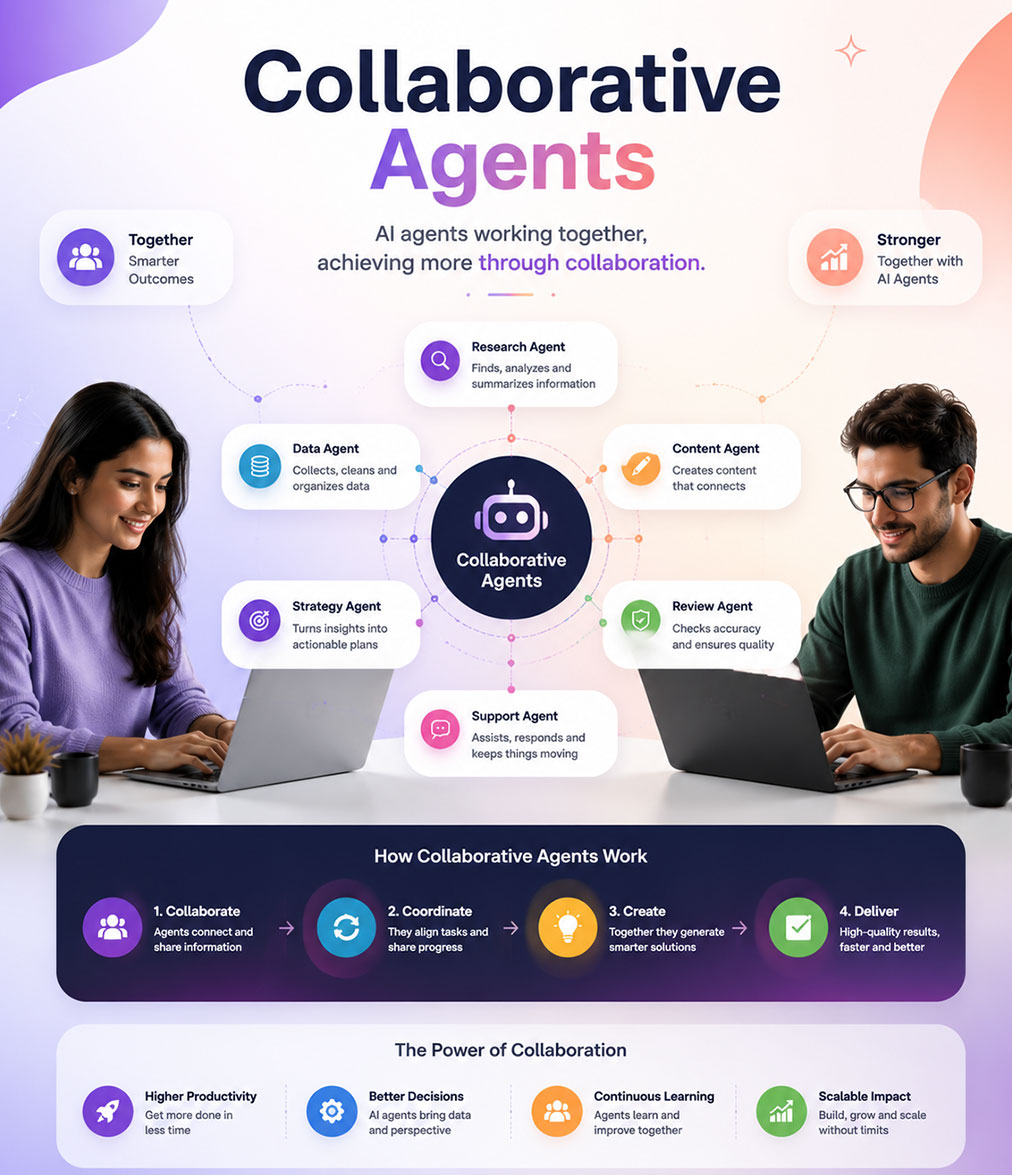
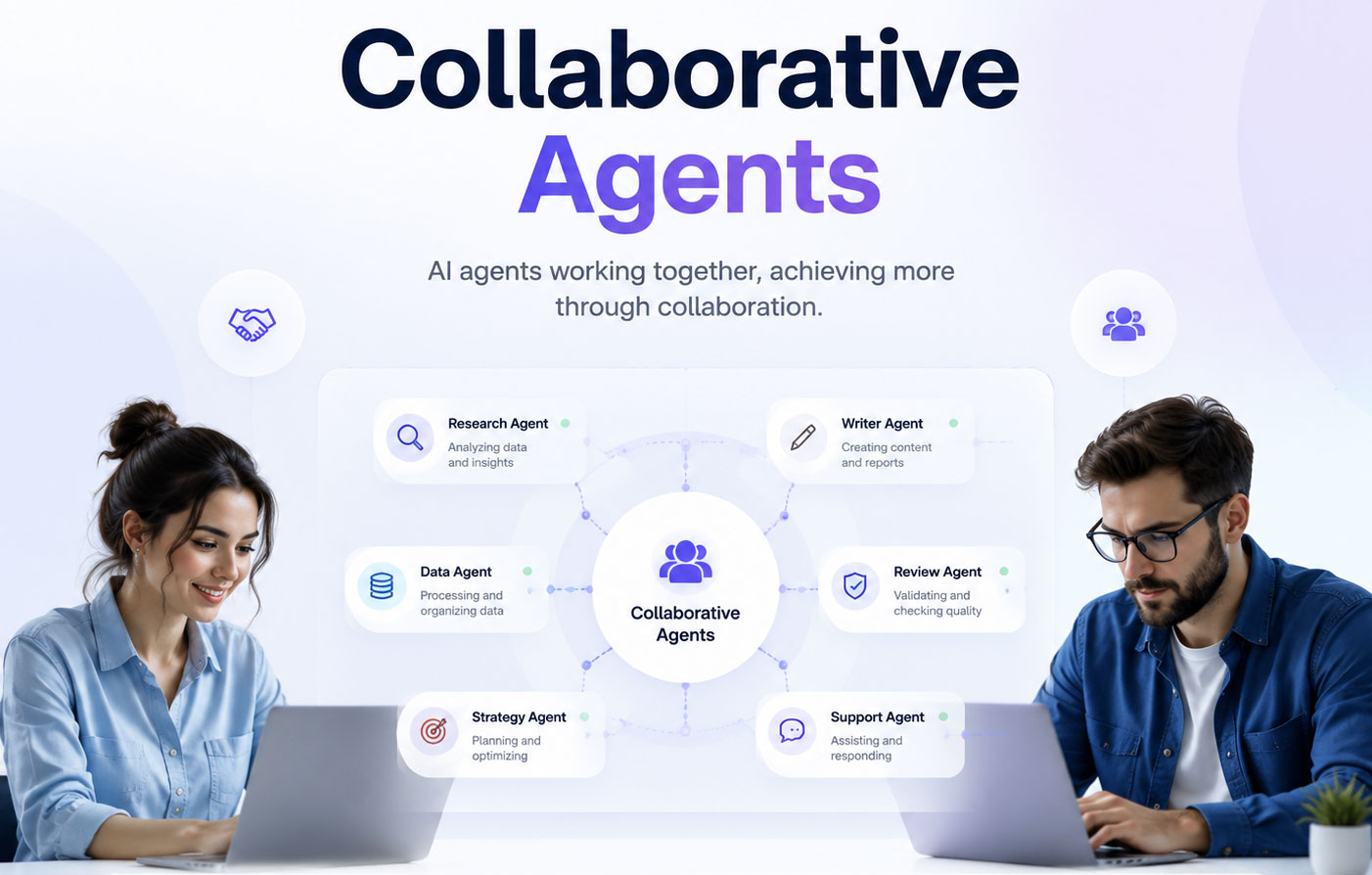
Augmantis builds Collaborative AI Agents designed for enterprises that allow agents to share their respective capabilities across business workflows. The structure of Multi-Agent Architecture makes it possible for individual agents to perform particular roles by sharing information, delegating actions, and collaborating towards results. This will allow companies to become more efficient in their operations, have better control of automation, and make decisions based on available data.

Unlike the case when one AI is responsible for all activities, the collaboration between AI Agents involves distributing the role among different AI agents. While one AI coordinates the activities, others provide research, analysis, validation, and other activities according to the role they play. In this way, AI Agent Collaboration provides an innovative approach to enterprise automation.
How Do Collaborative AI Agents Work?

What Are the Benefits of Multi-Agent Systems?
AI Agents That Cooperate for More Intelligent Operations at Your Business

At Augmantis, we create Collaborative AI Agents in USA, which connect several agents to collaborate on different tasks, communicate information, and make decisions. We help you streamline the process of your operations through automated multi-step processes and intelligent operations powered by artificial intelligence.

Role-Based Agent Specialization

Deploy tailored agent personas (e.g., researcher, coder, reviewer) that handle specific domains within a larger workflow.

Key Features

✔ Domain-Specific Agent Personas
✔ Hierarchical Task Delegation
✔ Cross-Functional Workflows

Swarm Intelligence & Coordination

Orchestrate massive, distributed problem-solving networks where multiple agents communicate to resolve complex bottlenecks.

Key Features

✔ Distributed Problem Solving
✔ Agent-to-Agent Messaging Protocols
✔ Consensus-Building Algorithms

Shared Knowledge Graphs

Provide a centralized, live-updating source of truth that all collaborative agents can read from and write to simultaneously.

Key Features

✔ Centralized Fact Repositories
✔ Real-Time Graph Updates
✔ Cross-Agent Semantic Search

Conflict Resolution Mechanisms

Implement logical frameworks that allow agents to debate, verify facts, and resolve contradictory findings automatically.

Key Features

✔ Confidence-Weighted Voting
✔ Logic Verification Loops
✔ Automated Peer Review

Human-Agent Teaming

Design seamless interfaces where human workers and collaborative agent networks can co-author work in real-time.

Key Features

✔ Co-Pilot Interface Design
✔ Context-Aware Suggestions
✔ Shared Workspace Integration

Collaborative Output Synthesis

Merge the parallel work of dozens of specialized agents into a single, highly refined final deliverable.

Key Features

✔ Multi-Perspective Summarization
✔ Unified Report Generation
✔ Final Output Formatting
Work With Us

Eager to Harness the Potential of Collaborative AI Agents for Your Business?

Discover how coordination of intelligent agents could help streamline complicated procedures and enhance business efficiency. Get in touch with Augmantis to discover ways you can use Multi-Agent AI to your benefit.

rags-systm-2

What Are Multi-Agent Collaboration Platforms?

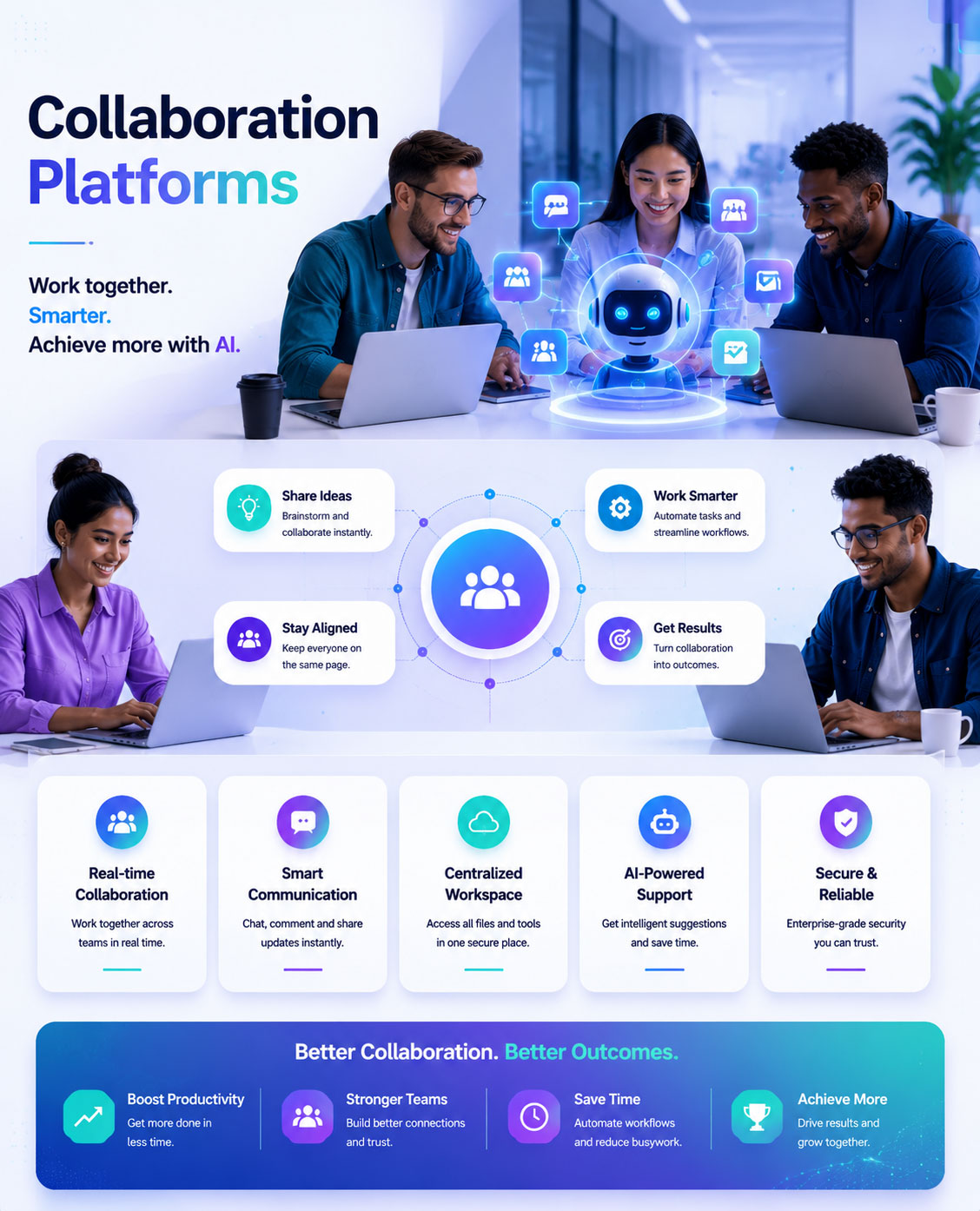
Collaborative artificial intelligence offers a way for multiple specialized agents to collaborate, communicate, and coordinate their actions toward achieving common business goals. Instead of relying on one AI system to perform all tasks, a business can spread out the responsibility among various agents that have varying capabilities. This will make any process more manageable and improve coordination among interconnected processes.

A good AI agent platform serves as a basis for communication, delegation of tasks, exchange of information, and management of the execution process. Using a properly defined Multi-Agent Framework, it is possible to set up the interactions between the agents, share context, verify information, and fulfill delegated responsibilities.

15+

Completed Projects

98%

Success Rate

12+

Happy Clients

ai-cons-imgs

What We Build — AI in Practice

Explore how Augmantis has helped organizations transform complex business challenges into measurable outcomes through strategic AI consulting, intelligent automation, and data-driven innovation.

Industries We Serve

We go deep in the industries we serve—not wide. Our production AI expertise spans insurance, warranty, healthcare, fintech, retail, automotive, logistics, and beyond.

Healthcare

Innovative Technology for Better Patient Care.

Learn More

FinTech

Secure Digital Banking Solutions.

Learn More

Insurance

AI Powered Risk Management.

Learn More

Supply Chain & Logistics

Optimizing Supply Chain Operations.

Learn More

Retail & Ecommerce

Modern Shopping Experience.

Learn More

Automotive

Smarter Mobility with AI.

Learn More

Edutech

Personalized Learning with AI.

Learn More

Transportation

Smarter, Safer & Connected Mobility.

Learn More

Restaurant

AI-Powered Dining Experiences.

Learn More

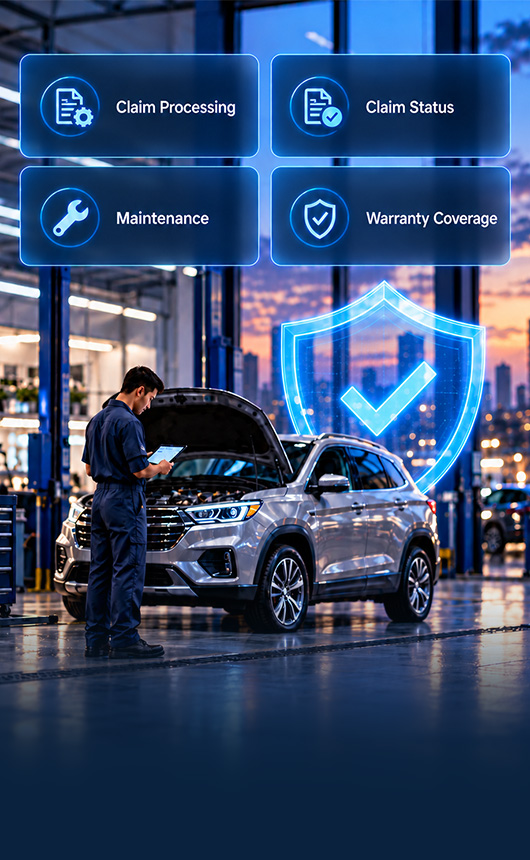
Warranty

AI-Driven Warranty Management.

Learn More

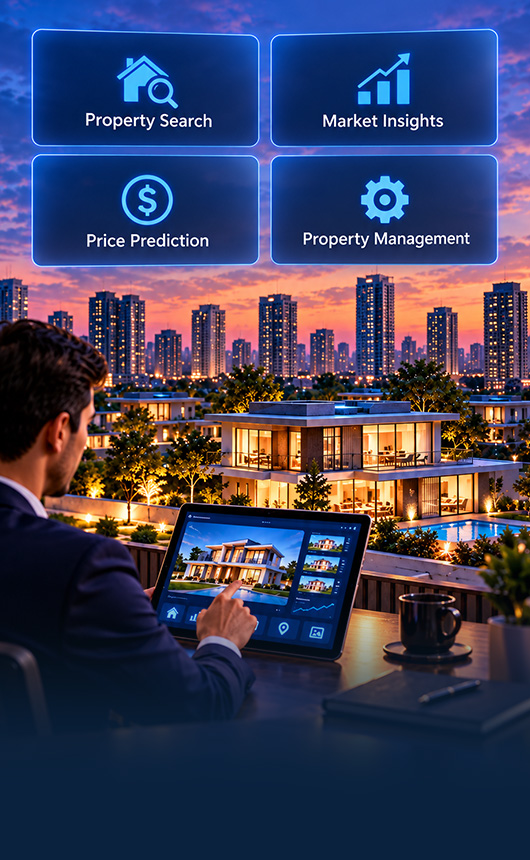
Real estate 

AI-Enhanced Real Estate Solutions.

Learn More

Development Framework for Collaborative AI Agent

Augmantis develops Collaborative AI Agents in USA through a methodical process, with all stages focused on developing a robust Multi-Agent Architecture. The process begins from looking for areas of automation to the definition of the role of agents and their coordination of operations.

Assess & Discover

Evaluate business objectives, existing workflows, operational challenges, and opportunities where AI Agent Collaboration can deliver value.

Strategy & Roadmap

Define the Multi-Agent Architecture, agent responsibilities, communication requirements, and implementation roadmap based on business priorities.

Data Preparation

Identify relevant enterprise data, organize information sources, and establish the context agents need to communicate and perform assigned tasks.

Solution Design

Design specialized agents, communication protocols, task delegation rules, and coordination mechanisms to support collaborative execution.

Develop & Integrate

Build and integrate the Collaborative AI Agent with enterprise applications, business systems, APIs, and required tools.

Optimize & Monitor

Evaluate agent performance, monitor workflow execution, refine coordination mechanisms, and improve system reliability and scalability.

Commitment to Providing Cutting-Edge Collaborative
AI Solutions for Driving Business Growth

Learn about the benefits that Collaborative AI Agent technology can bring to your company through better management of processes,
increased coordination of operations, and business transformation.

project-management
INNOVATE

New Ideas

project-management
DEVELOP

Quality Solutions

project-management
DELIVER

On Time, Every Time

project-management
DRIVE SUCCESS

Business Growth

Transforming Your Enterprise with
Collaborative AI Agents Through Us

Join your intelligent agents into one to make the processes in your enterprise less complicated. Let Augmantis work with you in planning, developing, and deploying Collaborative AI Agent systems that have structured coordination, security integration, and intelligence-driven task execution. Make your enterprise process management more seamless and integrated.

Frequently Asked Questions

Explore common questions about Collaborative AI Agents, multi-agent architectures, intelligent task delegation, agent coordination, and enterprise automation for smarter business operations.

Collaborative AI Agents are customized AI agents that interact, exchange information, and coordinate their activities in order to perform a shared goal. Collaborative agents are useful for business automation because they can divide complicated business processes among multiple agents that have different roles. For instance, one agent can gather information, another agent can process it, and the coordinating agent can check it.

In Multi-Agent Systems, there are several agents, each having its own specialization and working in coordination with each other within an environment. In AI, a single agent would have to complete its task within the range of its specialization, while using the multi-agent concept, the task is distributed among several agents.

In AI Agent Collaboration, various agents can share information, analyze various components of the job, and integrate their results. An information-gathering agent can gather useful information; another agent can find patterns, while yet another agent can structure the information gathered. It helps maintain the flow in the process and also saves effort from being repeated.

Typical AI is usually designed to work on a particular task in accordance with pre-programmed features or instructions. Multi-agent AI comprises many agents that communicate and delegate tasks among themselves to achieve their objectives. It helps organizations to deal with business processes comprising various tasks and decision-making steps through an integrated approach.

The above factors need to be considered in terms of responsibilities of agents, communication methods, delegation of tasks, access to information, security, scalability, and performance monitoring. The design of an efficient Multi-Agent Framework needs to take into account the interaction between agents, sharing of context, validation of output, and handling of exceptions.

AI Workflow Orchestration is responsible for the allocation, sequencing, and coordination of activities between Enterprise AI Agents. It defines the execution process, monitors dependency management, and decides on the transfer of information and responsibilities from one agent to another.

The AI Agent Platform offers the necessary framework for the development, deployment, control, and monitoring of AI agents. The platform includes features such as agent interaction, workflow management, enterprise integration, security measures, and performance management. This gives an organized framework for the development of AI Agents and enables expansion of collaborative workflows as business needs change.

Augmantis marries together the skills of AI engineering and the skills of software development for enterprises to design Collaborative AI Agent solutions based on certain business needs. The Augmantis development approach involves structuring the collaboration between agents, delegating tasks intelligently, integrating securely, and designing scalable architecture. We assist companies in realizing automation potential and implementing collaborative work processes.

Augmantis employs a systematic way of developing that takes into consideration the agent’s responsibilities, communication process, system design, integration needs, and security controls. We ensure access limits, information exchange, surveillance, and infrastructure scalability. This allows companies to retain operational control while increasing their ability to collaborate using AI technology.

Yes. Augmantis designs AI Agent Platforms based on appropriate Multi-Agent Frameworks and architecture patterns according to the needs of enterprises. It involves developing special agents, communication protocols, task delegation, and integration of agents into business systems. The idea is to develop an organized platform for AI-based applications.

Yes. Augmantis is capable of providing AI Workflow Orchestration that will enable task coordination, dependency management, and communication between specific agents. Via AI Agent Collaboration, companies can link up various AI competencies within the same workflow process.

Augmantis offers companies a solution to enhance AI Agent Development by finding the right use cases for the agent, assigning roles and responsibilities to the agent, choosing the right framework, and creating a scalable Multi-Agent Architecture. Our strategy is to work with reusable modules, enterprise integration, workflow management, and optimization in order to implement Collaborative and Multi Agent AI.