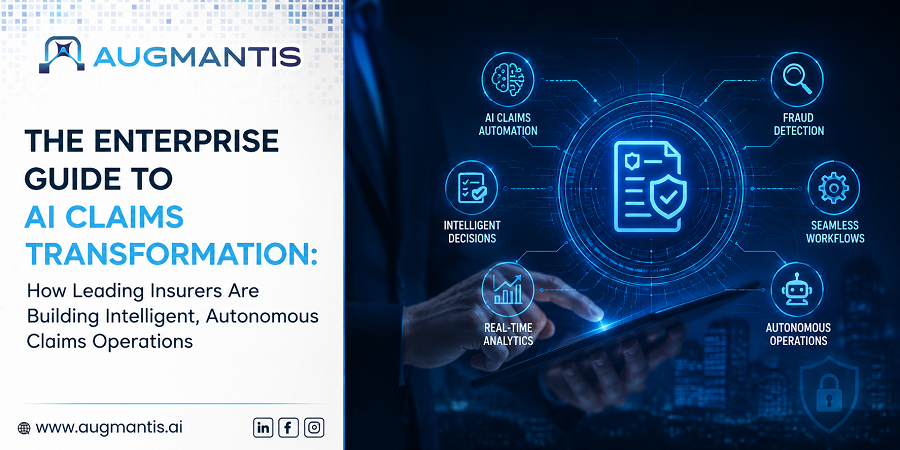
The claims process has always been that critical point in time when the policyholder finds out if the promise made by the insurer holds. For years, the procedure was all about paperwork, calls, and slow decision-making. Today, however, that narrative is changing quickly. Insurers globally are revolutionizing their entire claims processes by implementing intelligent automation, which helps reduce expenses, prevent fraud, and make claims decisions within minutes rather than days or weeks.
Besides, this change is not just an improvement but a complete reengineering of the process of filing, reviewing, and settling claims. In this guide, we will walk you through what exactly it means for an organization to transform its claims process with artificial intelligence and what technologies can be used for that.
Why Claims Transformation Is No Longer Optional
The traditional insurance claims process is well-known to any carrier: the client files the claim, the adjuster manually goes through documentation, emails get sent back and forth, and after several weeks, the matter is settled. The traditional approach was designed for a world of paper, and it’s failing in today’s environment.
Higher claim volumes, more complex fraud, and clients who demand fast service like at Amazon mean that this kind of workflow simply is not viable anymore. Here is where AI in Insurance has shifted from hype into a boardroom discussion point. Insurance companies that used to think of automation as something secondary and meant only as a cost-cutting measure have turned their views around; they realize that those that handle claims quickly and accurately will win market share.
What AI Claims Automation Actually Looks Like?
The essence of AI Claims Automation is replacing manual and rules-based processes with smart technology capable of analyzing, reasoning, and decision-making. In place of an adjuster reviewing each piece of paperwork (a police report, a repair estimate, and a policy), an AI program can process all three at once, check for inconsistencies, spot anomalies, and formulate a settlement recommendation in seconds.
Here’s how this would happen in practice:
- First Notice of Loss (FNOL): Natural language processing technology collects claim information from phone calls, emails, or chatbots and fills out the claim record automatically.
- Document Intelligence: Computer vision and optical character recognition extract information from invoices, medical bills, repair quotes, and photographs of damage.
- Fraud Detection: The machine learning algorithms analyze a new claim and look for suspicious behavior based on previous fraud patterns.
- Damage Assessment: The image recognition technology assesses the cost of repairs using photos of damaged car or property, usually more precisely than a human’s visual assessment.
- Straight-Through Processing: Simple and low-risk claims are automatically approved and paid out without human interaction.
This is an outcome that leads not only to higher speed but also to better decision-making, less leakage, and the opportunity for human adjusters to handle the most difficult and valuable cases.
The Rise of AI Claims Management Software
There is always solid technology infrastructure behind any successful transformation effort. Today’s AI Claims Management Software platforms become the nervous system of the claims process, combining FNOL entry, document processing, fraud detection, payment solutions, and customer interaction into one intelligent process flow.
In contrast to traditional claims systems, which needed to be manually adjusted whenever a new rule came into effect, modern solutions are based on machine learning models that get better and better all the time by learning from each completed claim. This gives such a solution another benefit: the longer it works, the smarter and more efficient it becomes.
For big carriers, such software becomes the core of what is known as an "autonomous claims operation" where most claims can be handled without any human input.
Beyond Insurance: The Warranty Claims Opportunity
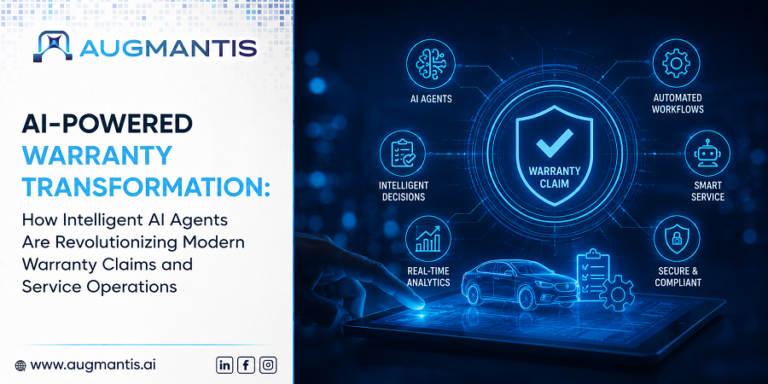
Where the discussions about claims automation tend to revolve around the world of insurance, the pain points that warranty providers struggle with are equally similar, i.e., many claims, manual verification, and lengthy reimbursement processes. Therefore, AI Solutions for Warranty claims have become just as popular as those for insurance.
Companies working on product replacement or repair, be they manufacturers, extended warranty managers, or retailers, are now utilizing AI Warranty Claims Processing to automatically verify purchase history, check serial numbers, analyze product failures, and process legitimate claims without having to go through lengthy and repetitive processes. Instead of waiting for several days for warranty replacement approval, the customer can have an answer in less than an hour.
This process is quite comparable to insurance claims automation. In AI Claims Automation for Warranty programs, the same components are used but tailored to warranty-specific data such as product registration data, service history, and defect databases of manufacturers. The result of this would be that the washing machine manufacturer can automatically recognize that the reported problem is linked to one of its existing defect patterns and approves the claim immediately without even visiting a technician.
Another benefit that retailers and OEMs get from using Warranty Claims Automation Software is improved product intelligence. By having all claims processed and categorized via AI technology, they receive valuable information about failure trends, which helps engineering departments discover design problems.
Real-World Examples of AI-Driven Claims Transformation
Several themes have begun to emerge as insurers and warranty companies mature their AI initiatives:
- Vehicle insurance companies applying computer vision technology to evaluate vehicle damage based on only a few smartphone photos taken, and delivering estimates within minutes rather than days, obviating the need for on-site visits altogether in small claims scenarios.
- Health insurance companies applying NLP technology to analyze medical claim payments against the coverage policies and clinical guidelines, identifying payment discrepancies and duplicate payments before actual payment.
- Property insurance companies leveraging satellite images and drone images coupled with AI models to evaluate the damage resulting from catastrophe occurrences such as hurricanes or wildfires affecting many properties in one go.
- Warranty programs of consumer electronics applying predictive analytics models that will indicate whether a product needs replacement based on initial failures of the product.
These are not examples of potential future applications, but rather existing deployments making an impact on customer expectations today.
Building vs. Buying: Why Custom AI Matters?
Out-of-the-box claims automation solutions can provide a rapid solution to the issue; however, most of the big companies face the limits of such solutions sooner or later. The policy language, risk appetite, and claims process of each insurance company are unique, which makes an out-of-the-box solution incapable of covering all the peculiarities. That is why more and more businesses turn to Custom AI Solutions for Businesses tailored to their claims data.
Any model that was trained using the historical claims data of an insurance company will be superior to any generic model trained on industry-wide data in terms of fraud detection and settlement prediction. Custom models allow integration with legacy policy administration systems much more easily than generic solutions do.
Choosing the Right AI Development Partner
Due to the difficulty inherent in regulatory compliance, data security, integrating legacy systems, and making sure models are accurate, few insurers actually try to do claims transformation on their own. They team up with companies that know how to create AI and work within the insurance field.
In choosing an AI Development Company in USA, insurers need to make sure the company has experience creating explainable AI, because claims are subject to regulations and will have to stand up to inspection by regulators and insureds. Insurers need explainable AI; a "black box" that cannot explain its decisions is not helpful in this business.
Regional knowledge is also important. Companies that provide AI Development Services in Chicago and other top tech cities in the USA often have extensive knowledge about the local insurance and manufacturing industries, which cluster in these cities, as well as proximity to the region, which facilitates hands-on cooperation during implementation. It is particularly important when talking about the Midwest, where large insurance companies and warranty administrators are concentrated.
In general, when selecting partners that will help with implementing Enterprise AI Solutions in USA, insurers should look for partners that can produce results, shorter claim cycle time, less money lost on fraud, better customer satisfaction ratings, not vendors that are trying to sell innovation through their AI products.
The Road to Autonomous Claims Operations
However, the final objective is not just a streamlined claim processing procedure; it is an almost fully automated claims handling facility where the overwhelming majority of claims are reported, validated, analyzed, and paid off without the involvement of people. Human adjusters take action only in cases where ambiguity or high value of a certain claim requires their involvement as experts but not mere data processors.
It would require not only implementing one piece of software but a whole strategy consisting of several elements, including data management, model governance, regulatory compliance, and change management within the organization. Claims adjusters have to be trained to cooperate with artificial intelligence while customers must be assured of its accuracy and fairness.
Early investments of insurers into the transformation process have already started paying off – from shortened claims cycles and reduced loss adjustment expenses to happy clients who no longer fear the claims handling process.
Final Thoughts
The era of claims transformation is no longer something that will occur in the future; it is currently taking place through efforts made by insurers and warranty providers. The firms that have made the biggest progress are those that are seeing AI as not an add-on to their existing claims process but rather as a way to create an entirely new autonomous claims process. This is where Augmantis, a reputable AI Development Company, comes into the picture to aid organizations in leading this change. From faster processing of auto claims to warranty verification to fraud detection on a large scale, it all has come true and can be achieved with the help of Augmantis.
Ready to Implement AI in Your Business?
From strategy to deployment, Augmantis helps you integrate AI into your workflows with scalable, future-ready solutions designed for real business growth.
Get Started with AI →Also Read: How to Implement AI in Your Business: Step-by-Step Guide 2026
Frequently Asked Questions
1. What is AI claims transformation in insurance?
AI claims transformation involves redesigning claims process workflows with the use of artificial intelligence technology such as machine learning, computer vision, and natural language processing for performing various functions including document review, detection of fraud, damage assessment, and decision-making on settling the claims. It is one of the most vivid implementations of AI in Insurance currently.
2. How does AI Claims Automation shorten the processing time of claims?
With the use of AI Claims Automation, tasks that require a human to do them in succession are performed in parallel, and therefore the processing time of the claim is significantly reduced. Rather than having the adjuster manually perform tasks of reading documents, validating information in policies, and assessing damages, the system can complete all these tasks instantly and therefore resolve some claims without involving any human at all.
3. Is AI Claims Management Software secure and compliant with insurance regulations?
Trusted AI Claims Management Software solutions incorporate audit trails, explanation of decision-making, and encryption to comply with insurance regulations. Since claims decisions can always be scrutinized by regulatory authorities or even by insured individuals, top Enterprise AI Solutions for Insurance are focused on transparent explanations of the reasons for claim approval, denial, or flagging rather than on obscure "black box" decision-making models.
4. Can AI Warranty Claims Processing be used by small and medium businesses, not only by enterprises?
Yes. Although big manufacturers and insurance companies have been among the first AI Warranty Claims Processing early adopters, these solutions have now become available to small and medium businesses via cloud-based, subscription-based AI Solutions for Warranty systems.
5. What is the difference between AI Claims Automation for Warranty and traditional claims automation for insurance?
The core technology, which includes document intelligence, fraud detection, and prediction models, is basically identical. However, the difference is in the data used, with Warranty Claims Automation Software using product registration information, serial numbers, and manufacturers' databases of defects, whereas insurance uses policy documentation, medical history, or accident reporting. In both cases, the aim is to validate the claim and handle it in the fastest manner possible.
6. How can one select the right AI development partner for claims automation?
First, assess the experience in the development in regulated and data-sensitive industries. Choose a proven AI Development Company in USA capable of delivering results in terms of cycle time reduction and fraud prevention, as well as the ability to work with specific company requirements instead of applying a universal approach.

Related Blogs