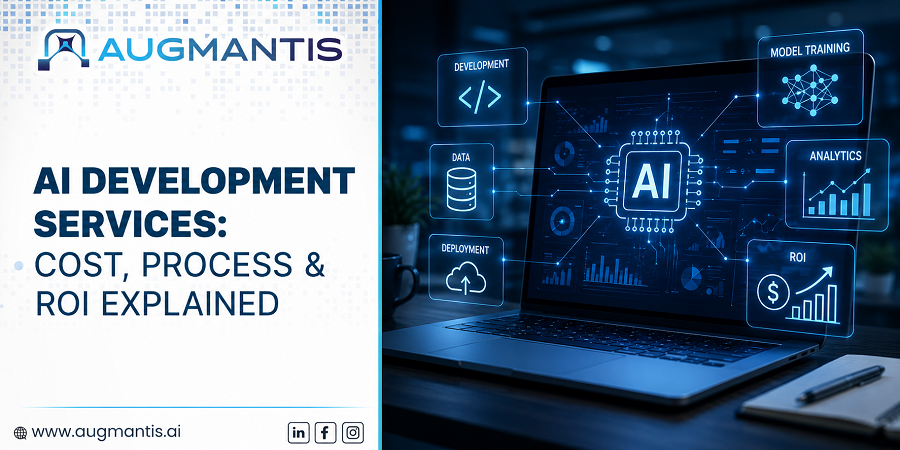
AI is no longer the question; the real topic is: How Much Does It Cost, and what ROI Can Be Generated from it?
Advanced technologies have long since left the experimental stage and have started being used by companies as a strategic investment. In today's data-driven environment, the business environment is progressively evolving in favor of companies competing with the help of automation of customer service, business processes, and advanced analytical capabilities provided by AI. As reported by McKinsey, more than 78% of companies leverage the power of artificial intelligence in one or another company's business process.
However, despite all of this, one question that always arises in executives' discussions regarding AI adoption is:
How costly is it to develop AI services, and how to ensure an ROI?
However, there is no clear answer to this question. The cost of developing AI depends on several factors such as project complexity, available data, infrastructure, compliance, model tuning, and other specifics of AI development. An easy AI chatbot will take some money to be built, but a predictive analytics platform or a generative AI solution will require months of engineering, data pre-processing, and optimization.
Thus, knowing the cost factors before investing in artificial intelligence is crucial for success. Those companies that consider AI development as an integral part of their business strategy are likely to benefit from superior efficiency, faster decision-making, better customer experience, and competitive advantages.
Industry Insight: As reported by IBM's Global AI Adoption Index, companies that embrace AI solutions for the purpose of process automation experience noticeable improvements in productivity, client satisfaction, and decision-making speed, thereby making AI being among the most rapidly expanding enterprise technology investments.
Whether you need to develop your first AI application or implement intelligent automation across the entire company, the following guide covers everything about the full process of building AI solutions, its prices, implementation time frames, models of cooperation, and the ROI your business will get when working with an AI Development Company.
Factors Influencing AI Project Development Costs
Every individual AI project is unique. And developing a chatbot for customer service is entirely different from developing an enterprise-level prediction system or a manufacturing-oriented computer vision application.
Listed below are some key aspects companies must consider before developing an estimate of costs and budgeting for the project.
1. AI Model Complexity
Complexity of the AI model itself is among the major cost drivers.
Easy AI apps leverage already existing foundation models, which are capable of fine-tuning for business purposes and save on time and costs related to infrastructure. Such models perform effectively in chatbots, document processing, recommendations, and workflow optimization.
More sophisticated Custom AI Solutions imply the use of proprietary models trained on business data. More advanced use cases like predictive maintenance, computer vision, fraud detection, or domain-specific language models need more engineering, namely:
- Extensive training data
- GPU-backed infrastructure
- Testing of the model
- Performance tuning
- Continuous retraining
- Constant monitoring
With the complexity of the project, the development time and operating costs also increase.
2. Project Scope and Business Requirements
Overall scope has a huge influence on cost considerations for AI development.
A chatbot on its own can usually be developed in a matter of months, whereas corporate AI systems that support several departments need a lot of planning and architecture.
AI Development Company starts all projects with an analysis of:
- Business goals
- Current workflows
- Technical infrastructure
- needs of integration
- Compliance requirements
- Future scalability
Most enterprise-level AI initiatives usually have to integrate with ERP software, CRM software, business intelligence software, cloud databases, APIs, and legacy software applications. Each extra integration requires more effort in terms of development, testing, and maintenance.
Rather than developing everything in one go, companies use a phased approach that provides tangible business value.
3. Data Collection and Preparation
Good data quality is an essential basis for all successful projects utilizing AI.
According to industry research, data preparation comprises 60 to 80 percent of any effort related to machine learning. Before training models, companies can invest a lot of time in preparing datasets by:
- Data Gathering
- Data Cleaning
- Normalisation
- Labeling and annotation
- Feature extraction
- Verification
- Assuring quality
- Data governance
The amount of preparation varies depending on the project. In computer vision projects, thousands of annotated pictures may be needed, whereas for predictive analytics, many years of business information are required.
Organizations that make early investments in data quality usually attain:
- Improved model accuracy
- Quicker deployments
- Lower maintenance costs
- Scalability improved
- Improved compliance
Effective data governance is also helpful for future AI initiatives and regulatory requirements.
4. Infrastructure and Technology Stack
The choice of technology is going to have long-term consequences on scalability, performance, security, and costs.
Modern Custom AI Solutions use more cloud-native infrastructure because it offers scalable computing power without significant initial investments.
Ready to Implement AI in Your Business?
From strategy to deployment, Augmantis helps you integrate AI into your workflows with scalable, future-ready solutions designed for real business growth.
Get Started with AI →Common AI infrastructures consist of:
- API gateways
- Model deployment platforms
- GPU computing
- Cloud storage
- Distributed databases
- Kubernetes
- Monitoring tools
- Backup systems
Companies also need to decide between open-source software platforms and managed cloud-based AI platforms. Open-source software offers more flexibility, whereas managed platforms make deployment easy.
Most companies that use Enterprise AI Services in the USA use hybrid cloud platforms.
5. Building the Right AI Development Team
Technology alone doesn't guarantee AI success. Organizations also need the right expertise.
A professional AI Development Company often develops multidisciplinary teams including:
- AI Solution Architects
- Data Scientists
- UI/UX Designers
- QA Engineers
- Project Managers
- Machine Learning Engineers
- Data Engineers
- Full-Stack Developers
- DevOps & MLOps Engineers
Every expert plays their part during the entire life cycle of the AI system, from design and modeling to implementation and improvement.
In addition to technical skills, efficient AI teams work hand in hand with business people to make sure that the technologies deliver on business objectives.
6. Development Timeline and Execution Strategy
A question that businesses ask most often is How long does it take to build AI?
It depends on the project complexity, data readiness, and integration needs.
Typical timelines consist of the following:
| Project Type | Timeline |
| AI Chatbots | 2–4 Months |
| Document Processing | 3–5 Months |
| Predictive Analytics | 4–8 Months |
| Computer Vision | 6–12 Months |
| Enterprise AI Platforms | 9–18 Months |
Organizations should focus more on sustainability rather than just being speedy. This often leads to the organization accumulating technical debt and incurring higher costs in the future.
Some of the common stages of a good AI implementation include:
- Business Investigation
- AI Readiness Evaluation
- Data Engineering
- Solution-based Architecture
- Model Development
- Software Integration
- Testing
- Deployment
- Continual Monitoring
- Model Optimization
Through this iterative process, companies can incrementally roll out AI while still improving performance.
7. Regulatory Compliance and AI Governance
As artificial intelligence assumes more accountability for decision-making in organizations, governance has become necessary.
Organizations adopting Custom AI Solutions must adopt a compliance mindset from the very start of their development.
Governance practices that must be adopted include:
- Security of Data
- Role-based access control
- Interpretible AI
- Audit trail
- Bias detection
- Constant surveillance
- security tests
- Version control
Businesses may also have to adhere to regulations such as GDPR, HIPAA, CCPA, PCI DSS, SOC 2, ISO 27001, and the EU AI Act depending on the industry.
Strong governance minimizes legal risks while building confidence among customers and stakeholders.
8. Testing, Validation, and Continuous Improvement
In regard to conventional software, AI applications need ongoing monitoring once deployed.
Shifts in consumer behavior, data sets, and business environment can slowly decrease accuracy over time.
A testing strategy within an organization may consist of:
- Functional testing
- Evaluation of model accuracy
- Bias assessment
- Load testing
- security tests
- User Acceptance Test (UAT)
After deployment, businesses should monitor continuously:
- Prediction performance
- Model drift
- Performance of infrastructure
- Customer Reviews
- Business Key Performance Indicators
- API performance.
Ongoing training and tuning ensure that AI continues to deliver measurable business value.
How AI Development Companies Estimate Project Costs?
AI Development Services providers never use fixed rates when offering their services. They always determine the cost of their services based on a systematic discovery process.
Step 1: Discovery Workshop
Teams define the following:
- Business goals
- Operational difficulties
- Performance metrics
- Anticipated outcomes
This evaluates whether AI is the optimal choice and determines project success.
Step 2: AI Readiness Assessment
Technical professionals evaluate:
- Data availability statement
- Current infrastructure
- Software ecosystem
- Cloud readiness
- Security needs
- Compliance requirements
Businesses with mature data tend to have lower implementation costs.
Step 3: Data Audit
The standard audit reviews the following:
- Missing values
- Replicate records
- Data quality
- Previous datasets
- Accessibility
- Governance standards
Higher ROI comes from better data quality, not from investing in ever more complex AI models.
Step 4: Technical Solution Design
Architects describe:
- AI systems
- Tech stack
- Cloud infrastructure
- APIs
- Designing Security Strategy of Integration
- Integration strategy
These decisions shape both development and long-term operational costs.
Step 5: MVP Cost Estimation
Many organizations start with a minimum viable product (MVP) rather than going full enterprise platform.
This approach helps businesses to:
- Faster ROI validation
- Reduce risks of implementation
- Collect user feedback
- Enhance future planning
- Develop slowly
AI Development Cost Estimates by Project Complexity
Each AI project is different, but they tend to fall into three types of investments.
AI Apps 101 Intro
Estimated Cost: $20,000-$80,000
Typical cases include:
- AI chatbots
- Intelligent search
- Document processing
- Sentiment analysis
- Recommendation engines
- Basic predictive analytics
Because these solutions rely on existing AI models, development is faster, and implementation risks are relatively low.
Sophisticated AI platforms
Estimated Cost: $50k - $150k
These solutions involve greater customization and deeper enterprise integration.
Examples are:
- Fraud detection
- Customer segmentation
- Predictive maintenance
- Workflow automation
- Computer vision
- Intelligent forecasting
Businesses looking for AI Development Services in Chicago usually start with mid-sized AI campaigns before developing into more extensive digital transformation initiatives.
Enterprise AI Solutions
Estimated Cost: $100,000–$500,000+
Big companies usually make investments in AI platforms that cater to several departments, business operations, and locations. Such platforms require sophisticated architecture, robust security systems, and constant optimization.
Some typical examples are:
- Knowledge Assistants for Enterprises
- Medical diagnosis platforms
- Systems for financial risk management
- Production optimization
- Self-operating platforms
Companies looking for Custom AI Solutions in Chicago tend to concentrate on scalable performance, proper management, and long-term business benefits rather than emphasizing only short-term development expenses.
AI Development Costs Across Industries
AI implementation costs differ across industries due to the unique regulations, operational challenges, and data requirements of each sector.
| Industry | Typical Investment |
| Healthcare | $300,000–$600,000+ |
| Financial Services | $300,000–$800,000+ |
| Retail & E-commerce | $200,000–$500,000+ |
| Manufacturing | $400,000–$800,000+ |
| Transportation & Logistics | $500,000–$700,000+ |
| Telecommunications | $300,000–$500,000+ |
| Real Estate | $250,000–$600,000+ |
| Education | $150,000–$800,000+ |
| Energy & Utilities | $400,000–$700,000+ |
| Automotive | $500,000–$900,000+ |
Nevertheless, these numbers are rough estimates. The final costs would depend on the scope of the project, infrastructure, integrations, compliance, and customization needs.
How to Choose the Right AI Development Pricing Model?
Choosing the right engagement model is as crucial as choosing the right technology. Yet, pricing structures are tailored to the size of the project and the goals of the business.
1. Fixed-Price Model
The fixed-price model is the most appropriate when the project requirements, deliverables, and timelines are well defined before the start of development.
It performs well for:
- AI chat bots
- Document processing systems
- Smart search applications
- Proof of concept projects
- Recommender engines
Benefits
- Expected budget
- Clear milestones
- Easy financial planning made better
- Reduce project uncertainty
Difficulties
- Limited flexibility
- Scope changes can lead to higher costs
- Less suitable for developing AI projects
This model is best suited for organizations with well-defined project requirements.
2. Time and Material Model
Most AI projects for enterprises usually change during the development process because of the emergence of new business needs, data sets, and priorities.
The Time and Material (T&M) pricing model means that businesses will be charged for the work actually done and not for a lump sum.
Some common uses of T&M include:
- Enterprise AI platforms
- Predictive analysis
- Computer vision
- AI projects driven by research
- Digital transformation in the long-run
Benefits
- more flexibility
- Easier Scope Change
- Continuous improvements
- Better support for innovation
Challenges
- Variable budgets
- Requires close project management
- Longer timelines can increase overall costs
An experienced AI development company in Chicago often suggests this model for complicated AI projects where requirements fluctuate.
3. Dedicated Development Team
When organizations engage in transformation through AI for the long run, a dedicated team approach is most likely to be followed.
Rather than outsourcing each task separately, companies will have access to experts working only on AI-related activities for them.
A dedicated team could consist of:
- AI Architects
- Machine Learning Engineers
- Data Scientists
- Software Developers
- DevOps Engineers
- QA Specialists
- Project Managers
Advantages
- Deep technical expertise
- Faster communication
- Better collaboration
- Long-term scalability
- Continuous innovation
Challenges
- Higher ongoing investment
- Requires active stakeholder involvement
This model is ideal for organizations developing large-scale custom AI solutions that require continuous enhancement.
4. Outcome-Based Pricing
Outcome-based pricing is based on business outcomes, not development hours.
Agreed-upon performance metrics to measure success, such as:
- Lower operating costs
- Greater productivity
- Quicker procedures
- Increased customer satisfaction
- Revenue increase
- More accurate forecasting
This model is being adopted by businesses investing in enterprise AI services in the USA more and more often because it links technology investments with measurable business results.
Measuring Return on Investment (ROI)
Benefits of artificial intelligence cannot be solely measured by implementation cost savings. Usually, companies reap benefits from higher efficiency and decision-making abilities.
A leading AI development company in Chicago usually evaluates ROI based on the following parameters:
- Efficiency gains
- Savings on operations
- Revenue increase
- Customer satisfaction
- Decision-making speed
- Automation of processes
- Decrease in errors
- Staff Productivity
In one instance, the use of AI in customer support can greatly decrease the time taken to respond while at the same time increasing the level of customer satisfaction and reducing costs.
KPIs must be set before the development of any application to ensure maximum ROI.
Common Challenges Affecting AI ROI
Even the best-laid plans for AI initiatives encounter obstacles that stall business outcomes.
Organizations that invest in AI Development Services in Chicago generally see:
- Low data quality
- Legacy system integration
- Restricted AI expertise
- Unattainable requirements
- Change management problems
- Infrastructure scalability
- Regulatory compliance
Taking care of these difficulties promptly enhances execution performance while lowering long-term operational hazards.
Strategies for Optimizing AI Development Costs
AI projects need not necessarily come with large budgets. Companies can ensure that they are spending money wisely by planning properly.
Leverage Foundation Models
Organizations can tailor-fit already existing AI models to save not just time but money spent on infrastructure as well.
Use an MVP
Releasing an MVP enables organizations to prove the worth of their product prior to a large-scale deployment.
Structure Datasets Properly
Structured data helps with better predictions and makes sure that there is no need for re-training, which leads to future scalability.
Use Cloud Computing Platforms
Cloud platforms provide companies with computing power without buying expensive hardware.
Develop Internal Skills
Building capabilities internally helps organizations innovate continuously without being reliant on external vendors.
Final Thoughts
Indeed, artificial intelligence has been transformed from mere experiments into a strategic investment by firms in order to streamline business processes, enhance customers' experience, make better decisions, and grow quickly.
However, there is no doubt that the successful introduction of AI depends not only on choosing highly efficient algorithms but also on many other factors such as evaluation of business goals, readiness of data, infrastructure, compliance, and maintenance, which should be considered prior to spending on AI Development Services.
No matter whether you need small automation or a large enterprise solution, businesses that align their investments in AI with concrete results always receive better results.
Collaboration with a professional AI development company in Chicago will allow businesses to develop advanced AI solutions that can provide them with sustainable results now and in the future.
Also Read: How to Implement AI in Your Business: Step-by-Step Guide 2026?
FAQs
1. How costly are AI development projects?
AI Development Services Cost depends on the complexity of the project, data preparation, integration needs, and infrastructure requirements. Simple applications can begin at $20,000, while enterprise-level AI systems can even exceed $500,000.
2. How long does the process of AI development take?
It usually takes between 2 and 18 months to develop an AI project, based on business needs, customization, availability of data, and enterprise integrations.
3. What is the significance of data preparation?
Better data allows you to build more accurate models, spend less time on training, and achieve a better outcome from your AI system in general.
4. Which infrastructure should businesses use – cloud or on-premises?
Usually, cloud-based infrastructure provides more options for scalability and flexibility, whereas companies select hybrid or on-premises infrastructure for their need for more control.
5. How can businesses optimize ROI from AI?
Businesses should define goals and make an investment in quality data, scalability, continuous monitoring of AI, and work with an AI Development Company.