Introduction
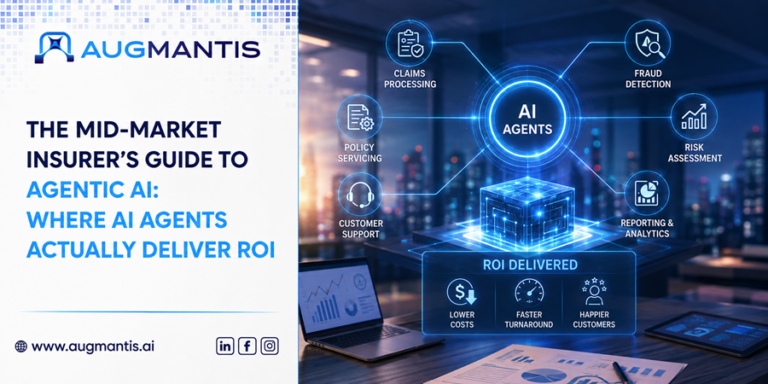
The processes of insurance and warranty have moved beyond automation and towards automation solutions that will understand context, make decisions, use enterprise systems, and orchestrate multi-process workflows. The agentic artificial intelligence system allows organizations to build a workforce that will handle repetitive claims processes and escalate decisions requiring human intervention.
For those insurance companies that want to revamp their claims processes, enterprise AI solutions for Insurance in USA can form the basis for doing so.
Understanding Agentic AI for Insurance & Warranty
What Is Agentic AI?
Agentic AI for Insurance is an AI system that can perform defined tasks via several steps instead of just reacting to prompts. An agent may be able to evaluate a claim, gather information, analyze documents, apply valid methods, and figure out what needs to be done next.
How Agentic AI Differs From Traditional Automation?
Standard automation typically works according to predetermined logic: If an event occurs, do something, and finish the process. An agentic system can consider the new conditions and take the next best course of action.
This is valuable when handling claims that have varied documentation, missing information, and special cases needing contextual judgment.
The Rise of Autonomous Claims Operations
From Manual Processing to AI Workforces
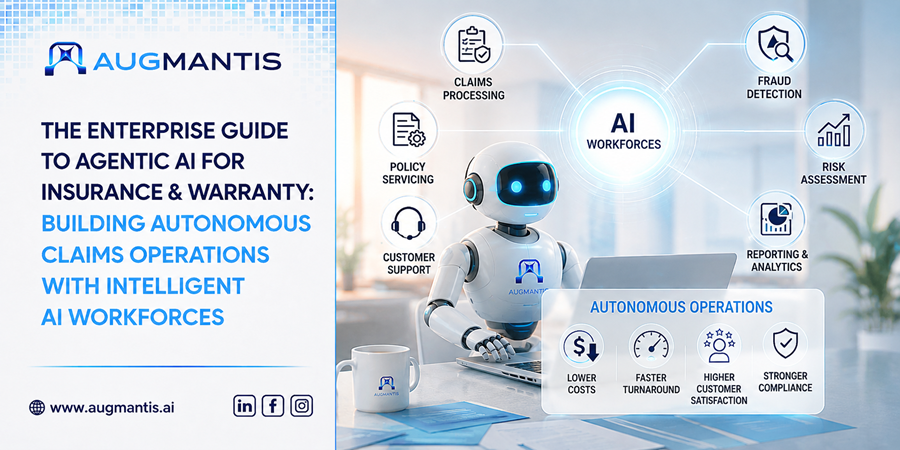
Operations entail many repetitive tasks, such as data entry, reviewing documents, accessing information, reporting on status, and verifying results. An AI labor force can handle many of these tasks while giving human staff members the time to concentrate on judgment-oriented tasks.
Intelligent AI agents can operate as digital laborers, each agent handling a particular task.
Why Multi-Agent Systems Matter?
Instead of depending on a single general AI system, firms have the capability of implementing specialized agents for intake, verification of coverage, risk assessment, adjudication, communication, and escalation.
Through this, custom AI development services can be customized in alignment with the workflow, business logic, data infrastructure, and other decision-making requirements of a firm.
Agentic AI for Insurance Claims
Automating First Notice of Loss
This initial notice of loss process generally involves collection of customer information, structuring of that information, validating it, and then entering it into the claims system. This task can be performed by an AI agent that would guide the process, spot the missing information, and structure a claim accordingly.
Using an agentic AI for insurance, the above-mentioned process could be made adaptive, as it would depend on the specific claim and not the scripted process only.
Supporting Claims Analysis
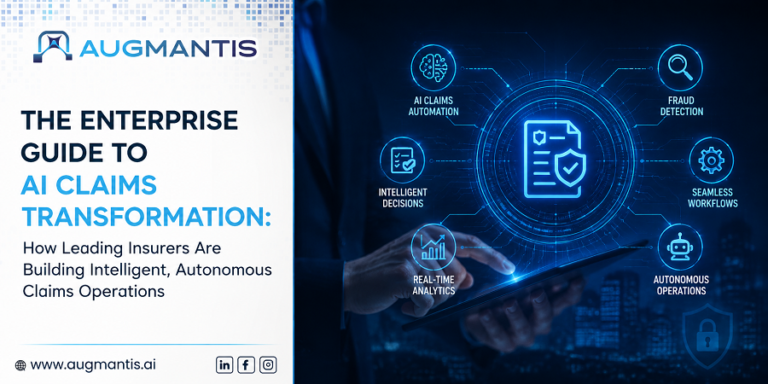
Once the intake is completed, the agents can look up the relevant policies, review the submitted documents, detect any inconsistencies, and prepare all relevant data for the adjusters.
This process is meant to provide comprehensive information about the cases and not to replace people with technology.
Building an AI Workforce for Warranty Operations
Where Can AI Improve Warranty Administration?
Warranty claim processing may include contracts, vehicles/products, dealer data submission, repair orders, spare parts, labor cost, qualification criteria, and approval policies.
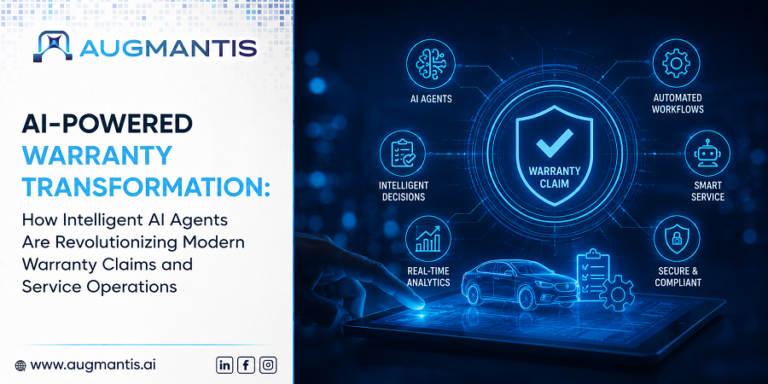
AI solutions for warranty can link all these elements using smart workflows to process information and actions in multiple enterprise applications.
AI Agents for Warranty Claims
Specialized agents for a warranty AI workforce can be assigned tasks such as claims intake, contract verification, repair analysis, eligibility validation, risk evaluation, and adjudication.
AI agents for warranty may function independently within set limits or interact with other agents before submitting the claim to a human for review.
Enterprise AI Architecture for Insurance & Warranty
The Core Components
A production-ready agentic architecture typically includes:
- AI agents and agent orchestration
- Enterprise data sources
- API and system integrations
- Retrieval and knowledge systems
- Business rules and policy engines
- Identity and access controls
- Human-in-the-loop workflows
- Monitoring and audit capabilities
These components allow agents to move beyond simple conversational interfaces and participate directly in operational workflows.
Connecting Legacy Systems
These institutions rely heavily on pre-existing claims, contracts, dealer, CRM, and finance systems. Full replacement of such systems is not only costly but also disruptive.
Enterprise AI for warranty management in the USA will offer an intelligence overlay over the existing architecture, where the AI agents can interface with the approved systems via APIs and other controlled interfaces.
Governance and Risk Management
Establishing AI Guardrails
The autonomous system must have well-defined boundaries. Organizations need to identify decisions that agents can make on their own, decisions that need authorization, and decisions that need escalation at all times.
For insurance companies, the enterprise AI solutions for insurance in USA must include access controls, audit trails, data governance, monitoring, explainability, and human supervision in its architecture.
Keeping Humans in the Loop
Human intervention is still required in cases that are complex or significant in nature. Agents can handle the routine cases in an automated manner, but all the other cases can be directed to human beings.
This way, we get a model wherein machines do all the operational work, whereas humans take care of decision-making.
Measuring the Business Impact of Agentic AI
Key KPIs to Track
Enterprises should measure AI performance against operational outcomes rather than simply counting automated tasks.
Ready to Implement AI in Your Business?
From strategy to deployment, Augmantis helps you integrate AI into your workflows with scalable, future-ready solutions designed for real business growth.
Get Started with AI →Important metrics include:
- Claims processing time
- Cost per claim
- Straight-through processing rate
- Adjuster productivity
- Exception rate
- Customer response time
- Claims leakage
- Accuracy of AI recommendations
Building a Business Case
The custom AI development services would ensure that the organization develops AI solutions based on achievable operational goals rather than implementing AI as an experiment.
The business case must clearly outline the increase in efficiency, processing time, consistency, customer service experience, and scalability.
Enterprise AI for Warranty Management
Modernizing the Warranty Claims Lifecycle
Warranty management can leverage AI throughout the claim process, from filing claims all the way through adjudication and settlement. Agents can review contracts, repair documentation, eligibility, and claims needing further investigation.
Enterprise AI for warranty management in USA thus allows for a steady transition from manual process coordination to an intelligent and connected process.
Automating Routine Warranty Claims
Standardized warranty claims tend to meet certain eligibility and approval criteria that are predictable. Standardized cases may be automatically processed provided that all the necessary information is available and meets certain eligibility criteria.
Warranty claims automation software in the USA may incorporate workflow automation with the help of artificial intelligence technology to automatically process routine cases and forward exceptions to specialists.
Scaling AI Agents Across the Enterprise
Starting With High-Value Use Cases
Automating an entire claims process within an organization does not have to be done all at once. One good way to start is through a high-volume process with tangible results, enough data, and defined decision limits.
After the first successful implementation, more agents can then be deployed in other nearby processes.
Moving Toward an Autonomous Claims Ecosystem
With more and more specialized agents being integrated, companies can form an AI-powered team that would be able to organize complex processes.
AI solutions for warranty can grow from separate applications of automation into a comprehensive system where various agents take care of different aspects of claims processing.
The Future of Insurance & Warranty Claims
From Automation to Autonomous Operations
The next generation of AI for enterprises will consist of solutions that will be able to analyze the context, organize the workflow, communicate with enterprise applications, and choose proper actions.
Agentic AI for the insurance industry may be viewed as one that can help achieve this transformation and become more responsive and adaptive.
Creating an AI-Native Operating Model
It is not a matter of automating every human task, but rather designing processes such that AI takes care of tasks that require large-scale repetition, data analysis, and volume, while human teams can concentrate on decision-making and other strategic activities.
AI agents for warranty could very well become a part of this solution as warranty management organizations strive for increased speed, accuracy, and scalability of their claims process.
How Enterprises Should Begin?
Identify the Right Claims Process
Identify current work processes to map out the flow, repetitive tasks, bottlenecks, manual transfers of data, and exception handling.
The best applications often come from processes that involve large numbers of transactions and inefficiencies.
Build, Govern, Measure, and Scale
Such a successful deployment would begin with the creation of specific objectives, data access control, agent permissions, escalation policies, monitoring, and performance metrics prior to scaling out into other processes.
Our custom AI development services are able to help achieve such a staged approach by aligning AI agents with enterprise architecture and business goals.
Conclusion
Agentic AI marks a paradigm change in how insurance and warranty companies may manage their claims processes, as instead of rigidly automating things, they may create teams of AI systems that are able to understand the input, perform certain activities, collaborate between different platforms, and escalate more complicated cases to humans.
Those who will benefit the most from this technology will be the companies that are not only skilled in AI but also have robust data architecture, good governance, integration capabilities, and well-defined goals of operation. In this case, enterprise AI solutions for insurance in the USA and Augmantis can offer an excellent basis for this journey.
Frequently Asked Questions
1. What is Agentic AI in insurance?
Agentic AI employs autonomous or semi-autonomous AI agents for multi-stage insurance processes including claim entry, document processing, policy coverage verification, risk evaluation, and task management.
2. How can Agentic AI improve insurance claims processing?
It can minimize manual effort by gathering information, analyzing documents, fetching policies, identifying information gaps, recommending actions, and escalating exceptional cases to human experts.
3. What are AI agents used for in warranty management?
AI-driven software can be used to help process warranty claims, validate contracts, analyze repair orders, determine eligibility, adjudicate claims, assess risks, contact dealers, and manage exceptions.
4. Is Agentic AI suitable for enterprise insurance companies?
Yes. There are many scenarios where such a framework could prove to be very useful when dealing with large numbers of claims, complicated processes, multiple applications, and structured as well as unstructured data.
5. How should an insurance company start implementing Agentic AI?
The organization should first select a high-volume use case where business benefits can be realized. From there, it can create its governance structure, security measures, escalation procedures for humans, and KPIs before scaling up AI across more workflows.